


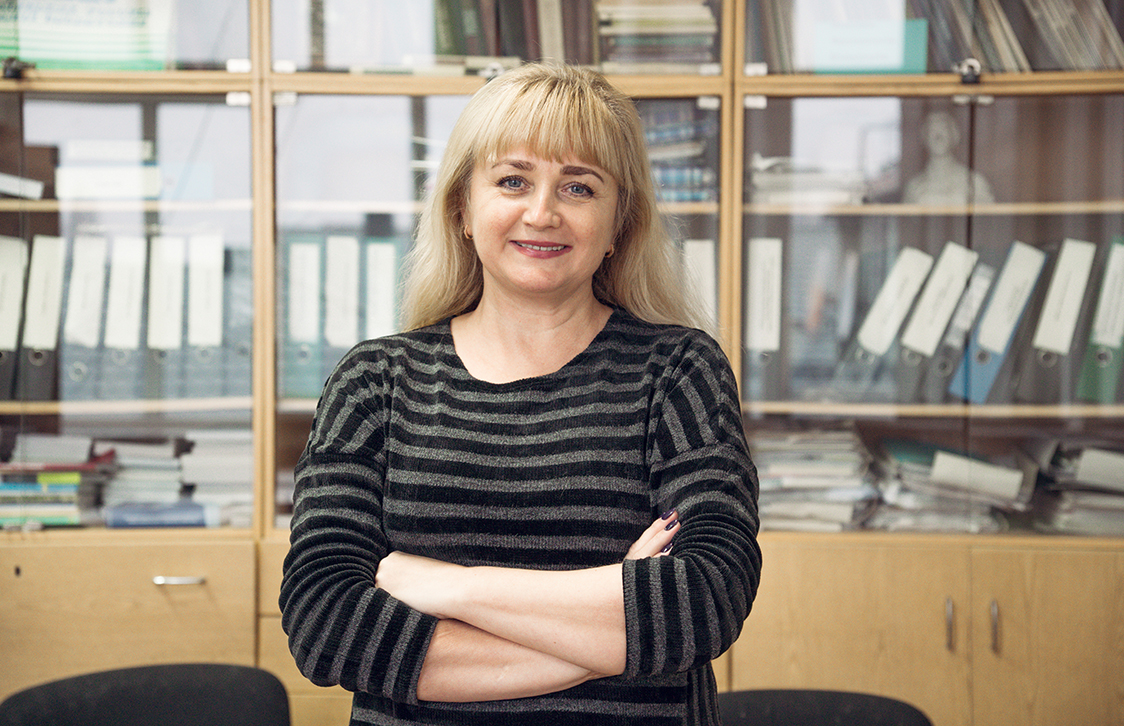
The French writer Jules Renard believed that the soul is reflected in the eyes, and society in the language. Absolutely certain that knowledge of the native language is necessary for every person who seeks to live in a mature society. This makes the work of those who teach their native language more valuable and important. Halyna Hrymashevych, a lecturer at Ivan Franko Zhytomyr State University, spoke about her life and work
“I had an ideal – my teachers. These are Mykola Mykhailovych Bohdan, Mykola Vasyliovych Nikonchuk, Leonid Tymofiiovych Pyvovarsky, Hanna Kyrylivna Kontorchuk, Lyudmyla Ivanivna Bondarchuk, Wanda Tadeuszivna Tchaikovska and others. They were such great people!… When I went to study, I probably didn’t have a conscious choice, but my inner feeling told me that not only my future is connected with the Ukrainian language. Then all my relatives and acquaintances said that it was necessary to enter Russian philology. Relatives from Belarus said that suddenly the fate would be such that I would have to go to Belarus, where I would be needed with the Ukrainian language. And at home I told everyone that I was going to study Russian philology. When I arrived (apparently, there was a feeling), I submitted the documents in Ukrainian. I came alone, submitted documents and studied”
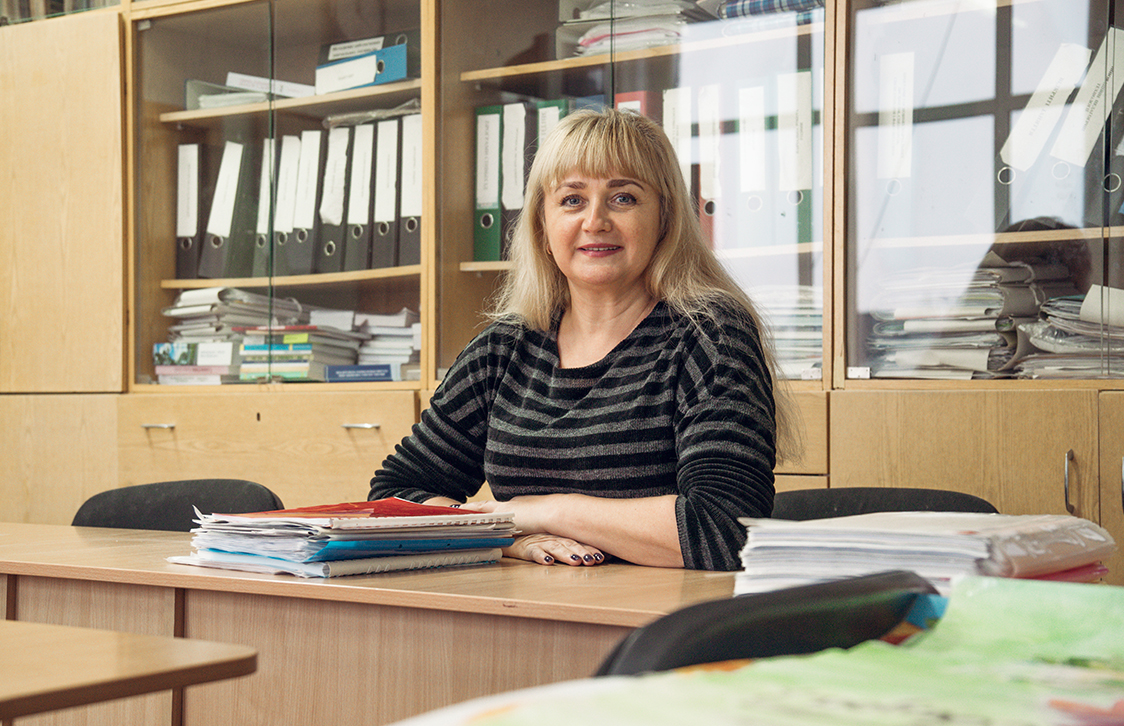
“In teaching, I like working with students the most. Not remotely, but in the audience. You see living eyes, you see how you are perceived, you can orient yourself in a situation to make it more interesting for students. I really like to work on setting and solving scientific problems – diploma and term papers, scientific articles, preparing students to participate in conferences… Live communication is the best. Here you can use a variety of forms and methods of work, you can really apply an individual approach to the student. You see and understand that you can ask in which direction to direct the work”
“All my life I do what I love and I love what I do. And it’s not just about work”
“I love everything I teach, but some disciplines are more complex. Anyone who has studied philology knows that the most difficult is the historical grammar of the Ukrainian language… But I loved this subject. I like to teach modern Ukrainian literary language. Well, what about without her? These are our norms, our language. I like to teach dialectology. I also like something new: this year I will master a new discipline for the first time – socio- and ethnolinguistics. Something new is always much more interesting”
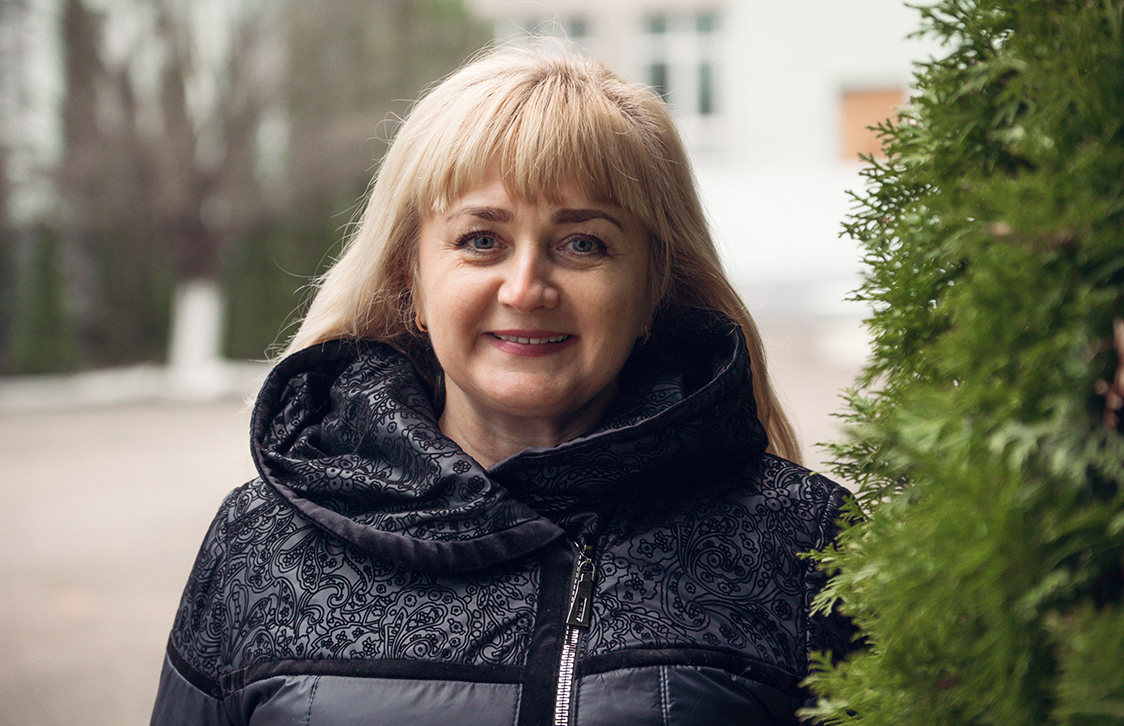
“I studied in a remote Polissya village, where there was an eight-year school. My first teachers instilled a love for language there, mostly it was their role. All my classmates liked the lessons of Khomenko Halyna Ivanivna, who came to us after graduating from our Zhytomyr Pedagogical Institute. She taught us not only language and literature, with her we organized various clubs, and put “Forest Song” in the village club. She taught us to be real. And I see this authenticity in all my classmates with whom we still communicate. We are all grateful to fate that such a person has been in our lives”
“I think students say I’m a strict teacher. I don’t think it’s too much – I’m just trying to be fair. And I do not have such that in the same students everything is “excellent”, “excellent”, “excellent”, and in others – all the time “satisfactory”. It all depends on how students prepare for class: I and excellent students may have a low grade if they do not work… Lately it hurts that everything is devalued. When you put your soul into it and don’t see the return, it becomes sad. If I teach in lectures, I try to have a return on practical classes from students”
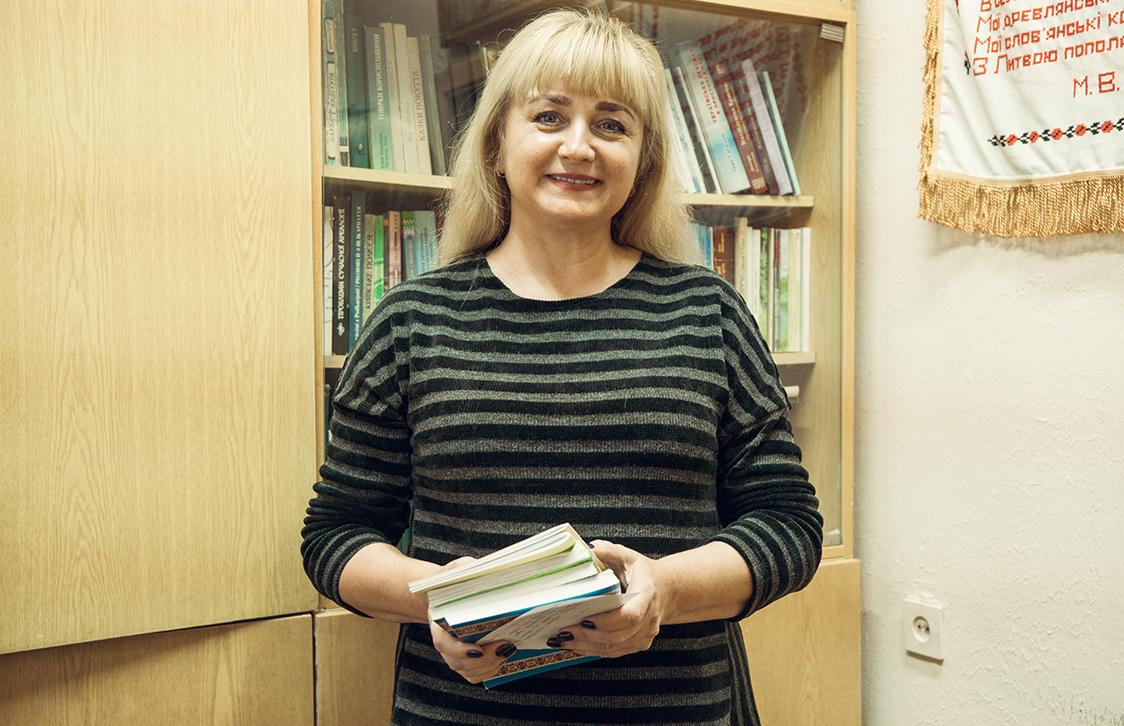
“It seems that my students and I don’t have a single lesson when we don’t laugh at something. A few years ago, at a lesson of dialectology, one of the students gave the answer: “As the famous scientist of the XIX century Hryhoriy Arkushin said,” and quoted something there. Fortunately, Hryhoriy Arkushin is still alive. It happens”
“First of all, future professionals need to be taught to understand their involvement in the case: if you plan to be a teacher of the Ukrainian language, you must be a role model for your students, for those you teach, you must love this subject, know it. In my opinion, professionalism comes first. It is sad at times when our former students, who are now teachers of the Ukrainian language, speak Russian”
“I feel sorry for the students who found themselves studying during the quarantine period. First of all, they don’t have normal communication with each other, because communication via computer is not that. Second, they do not always have the strength to force themselves to learn. This is really the case. Some students who were strong before quarantine have now lost interest in learning, lowered their own rating. This is now the problem of training future professionals ”
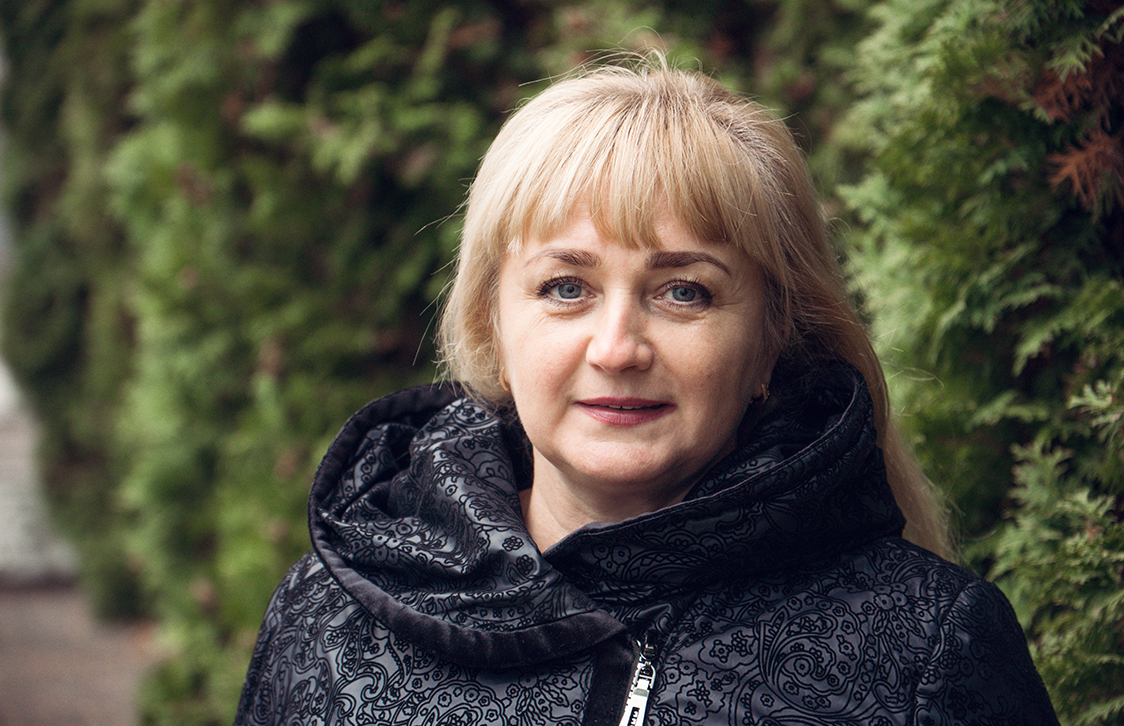
“We are happy to have our own writing, our own Ukrainian language, we can show ourselves in the world. How do others perceive a person? By the way he speaks”
“Language is passed down genetically from generation to generation. It is what connects generations, what we grow out of, and what we carry into the future. Language is the genetic code of the people… If you live in Ukraine, walk on Ukrainian land, eat Ukrainian bread, have to speak Ukrainian… I think that after 30 years of our independence the issue of bilingualism should not arise at all”
“Every writer wants to express himself, to express himself in such a way that he is recognized in an individual manner. Some use dialectisms, others use profanity, because this is also their feature of idiosyncrasy. Someone uses slang or slang speech or saturates the work with author’s neologisms, new words. And again: why do they do it? For the sake of recognizability, this is their speech. Every writer is his own master… Let’s take classical literature. Did Nechuy-Levytsky or Panas Myrnyi write exactly like that? Of modern writers, I love Lina Kostenko very much, I am impressed by the work of Volodymyr Lys, some works of our compatriot Volodymyr Danylenko – there is a noticeable authorial style. I like Maria Matios, Yuri Izdryk, Serhiy Zhadan, and others… In my opinion, an intelligent person should read different works: something that is really a reference, and something that is not perfect at all. All this in order to be aware of what modern literature lives today and what our young people read”
“I love Mykhailivska, Korbutivka, the hydropark. I love Zhytomyr for its quiet streets. I have been living in Zhytomyr for a long time – this is where I was formed, I feel confident here… My life has long been connected with Zhytomyr”


