


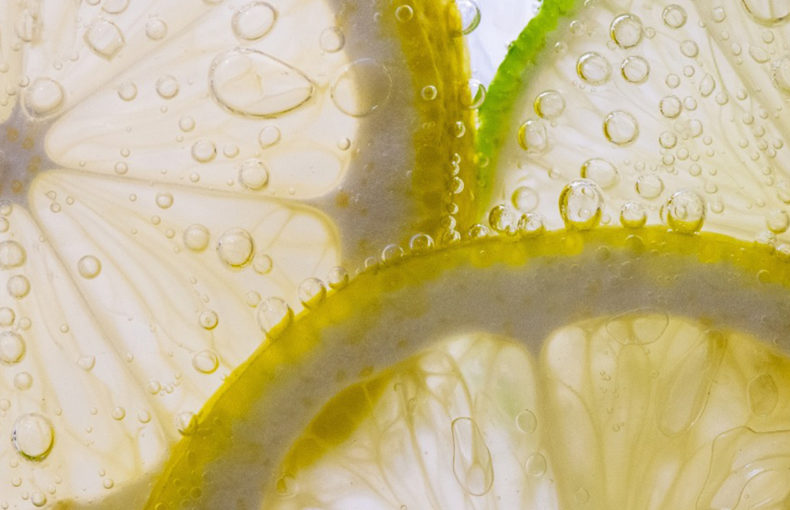
In the hot July day many people enjoy a wonderful drink – lemonade. With slices of lemon and ice in a transparent glass or in a fashionable little jar of mint or blueberry, with slack or even cucumber. It turns out to be one of the oldest beverages, and the number of lemonade recipes is immense
The basis of lemonade is a lemon, the country of origin of which is considered by India, more precisely the area that today occupies the state of Assam. From there almost 2 500 years ago the lemon “moved” to China, where its extraordinary medicinal properties were used in medicine. Further, the fruit traveled through South-East Asia to Mesopotamia (this is where Iraq and Syria are now) – here the lemon juice was used as an antiseptic and antidote from the snake. About X century our hero from Palestine travels to Italy and gradually spreads to Europe.
Ancient Greeks believed that lemons originated from the mythical garden of nymphs Hesperidins. For ancient Jews, the citron was known even before the time of Christ, in the Roman mosaics of Carthage and Pompey found his image.
The doctor of the Arabian commander Saladin, Ibn Jami, wrote in the XII century a scientific treatise on the lemon, and the Egyptians in the XIV century. From his juice was made “cashew” – a drink from fermented barley, to which added black pepper and mint leaves.
Lemonade – one of the most ancient beverages, until now has become almost unchanged, although it arose almost by accident. The legend tells us that one innocent servant of King Louis XIV, giving to the table his majesty wine, mistakenly took the lemon juice. On the way, having understood the consequences, he added mineral water to him. Who already knows how he gave the king, but Louis unexpectedly liked it!
There is also a more common story: the lemonade in the classical form arose in the middle of the XVII century in France. This is a drink from water (could be mineral), lemon juice or lemon tincture and sugar. Over time, lemonade appears in Italy, where the smart Italians have diversified him, adding herbs, fruits, roots, spices.
In 1767, the Englishman Joseph Priestley, experimenting with gases in a brewery, created carbonated water, after 3 years the Swedish scientist, Ulaf Bergman, invented a device for saturation of water with carbon – a saturator. In Germany, a jeweler and watchmaker, Johan Schwepp (who would have thought), spent 20 years to implement the inventions and obtain a patent for the production of soda water. The invention of citric acid by Swedish pharmacist Carl Shelele added the completeness of production, and since 1833, lemonade has become the most famous of carbonated beverages.
With entrepreneurial skills, the initiative Johann Schwepp created the company J.Schweppe & Co, which started the production of various lemonades under the general name Schweppes Lemonade. Loud success gave them the opportunity to become suppliers to the Royal Court in England, and subsequently in many European countries. Since and until now, “J.Schweppe & Co” is one of the leaders in the production of lemonade.
Over time, each country, each manufacturer added to their lemonade their tastes: in Egypt – lemon juice and sugar, in India – ginger, saffron, cumin, garlic, in England – raspberries, blackberries. There are even lavender lemonade that is enjoyed in Canada.
As for the classic recipe, the well-known encyclopedic dictionary Brockhaus and Efron gives advice:
The classic of culinary literature Olena Molokhovets in the popular edition of 1861 offers:
Personally, I like the home-made lemonade when three liters of water need to brew three tablespoons of lavender, cool, add three tablespoons of honey and juice of two limes. A special tint of taste can be reached with juice of cherries or currants, well, and of course ice.
Solve yourself to your liking; go on a journey through the cafes of Zhytomyr! Sure: you will find your favorite drink. And you can create it yourself – there is a choice! And then no heat should be hindered, because summer is a time of travel, rest and adventure. Do not waste time!
Translated by Aliona Matushevich


