


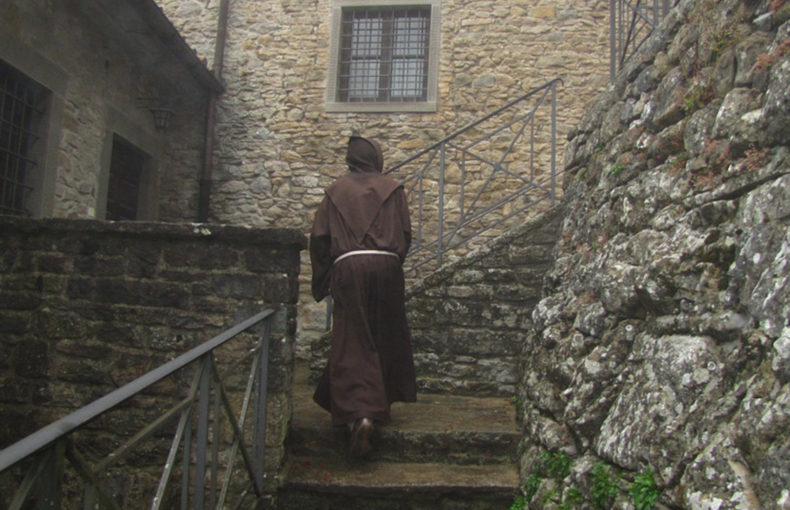
There are themes in the history of mankind, to which attention is always focused. Writers, artists, and even treasure hunters are interested in the lives of monks, for whom spiritual deeds were commonplace. There are such and in the history of Zhytomyr region. And even the locality is, which is closely related to the extraordinary persons and events
A written mention of the village of Ivankov first appeared in 1501. For its long history, it had a lot of owners and passed from one to the other. In a long line – little-known landowners Morzhkovski, Obukhiv, Orlovski, but there were prominent personalities. One of the most famous owners of Ivankov is entrepreneur Nikolay Tereshchenko, who organized a sugar factory here and gave work to almost half a dozen peasants. Fantastic success for today!
From the beginning of the 20th century, Anna Tarasevich, the wife of the famous epidemiologist, academician Lev Tarasevich, who, with his own efforts and money, saved hundreds of people from Ivankov and the surrounding villages from the diseases. Anna (in the girlhood Stenbock-Fermor) was the right-handed niece of the Swedish King and the great-great-granddaughter of General Stanbock-Fermory, who opposed the army of Peter the Great in the Russo-Swedish War.
Undoubtedly, Ivankov’s memorial is the temple of the Nativity of the Holy Virgin, whose architecture successfully combines the style of classicism and the European baroque. Initially, the temple was built as a Catholic church of the Ascension of the Mother of God by the efforts of the founder – the Catholic Ukrainian gentry Paul Borek, Zhytomyr Cossack, and the money of the peasants. The consecration of the temple took place in 1793.
Apparently, Boreiko was a sincere supporter of the long-standing order of wandering travelers – Trinitarian monks, which undoubtedly greatly influenced the style of architecture and the interior of the church, more typical of Western European countries and less common in our lands. And the paintings are uniquely unique and unique, preserved or known.
The history of the order of the Trinitarian monks is as old as it is interesting, but unfortunately not well known to the general public here in Zhytomyr region. It’s worth telling about it, because then the temple decorated with miraculous frescoes will be treated differently. The author of the paintings is Joseph the Scribe, a mysterious Hints Trinitarian, an artist from God.
The Order of the Holy Trinity (Latin Trinitarians) was founded in 1198 by the French theologian Jan de Mata and the hermit Felix de Valois. The founders dedicated their activities to the charitable cause – the redemption of Christians who fell into slavery to Muslims. Their motto was “GLORIA TIBI TRINITAS ET CAPTIVIS LIBERTAS”. In Ukrainian it sounded like this: “Glory be to you the Trinity, and prisoners freedom.”
The Order was distributed in Italy, France, Spain, Poland and Ukraine. The Order of the Order was very strict: the monks did not have to own property, ride a horse, eat meat or fish, and so on.
Trinitarians were mainly begging in wandering and almighty gathering. There were not uncommon cases when the monks were slavering Muslims for the liberation of prisoners.
By the way, the Trinitarian monks in 1580 saved from the captivity of the future writer Miguel de Cervantes, the author of Don Quixote, who impressed with writing a work that glorified him all over the world. At the end of his life, the famous writer, the national pride of Spain, himself became a monk of the Order of Trinitarians.
The Order of the Holy Trinity exists to this day. It has its monasteries in Europe, and activities in the Middle East countries of Syria, Iraq, etc.
Josef Prachtler, a trinitarian, who decorated the interior of the temple in Ivanovo, was born in Vienna in 1737. In 1754 he entered the Order of Trinitarians in Lviv, and in recent years lived and worked in the town of Brailov, Vinnitsa region, where he died in 1799. As a painter, the Treasurer was extremely popular; he was invited to work in various cities of Ukraine: Lviv, Ternopil, Kamyanets-Podilsky. He also painted the interior of the Lutsk Church of the Archangel Michael and the Apostle Paul.
The paintings and frescoes of the Charterer were fascinated by the Polish King Stanislaw August, who did not spare time to spare, to inspect and enjoy the work of the wizard.
Creativity of a monk-painter is a white page in the history of the sacred art of our lands. The doctor of art, Professor Kamianets-Podilsky National University Natalia Ursu, who explores the painting of the interior of Catholic churches, refers to a single source – the book of prayers of X. I. Kzhyshkovskyi published in Vilna in 1843, where there is a description of the works of the Trinitarian monk Joseph surname Prechtl.
Recently, a short mention was made in the 1882 edition of the Geographic Dictionary of the Polish Kingdom that it is evident that the trinitarian Josef Prechtel (for some sources, Prehtel, Prehtl) lived and worked for several years in the Kamyanets-Podilsky monastery.
So, for inquisitive researchers, ethnographers, art historians of Zhytomyr region and adventurers there is a wide field for activity and search.
Sergey Sobchuk, Member of the National Union of Local History of Ukraine
Anna Sobchuk, co-author
Translated by Aliona Matushevich


