


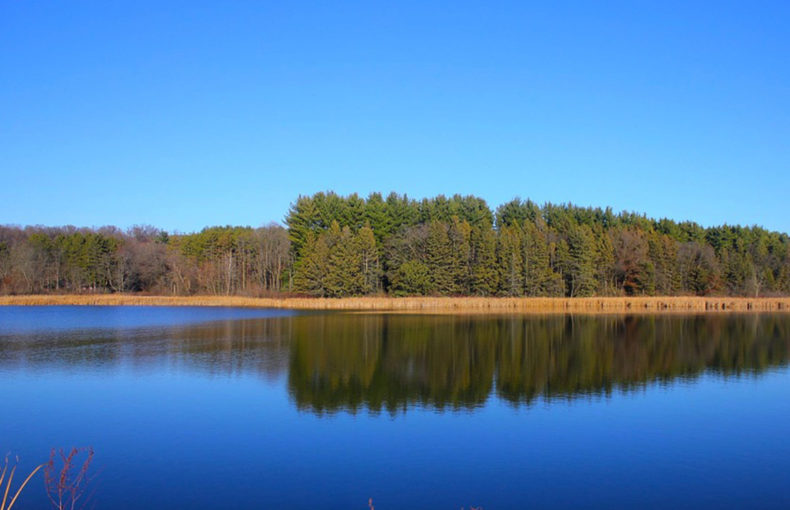
Zhytomyr region has long been called the Volyn Switzerland for its picturesque rocky shores and clean and calm rivers. “Water is life,” said the Latins, emphasizing the importance of water resources in human life. But not only can people not live without water, the city also grows and develops better when there is a sea, a lake or a river next to it. So in the life of Zhytomyr, water played the role of a nutrient source and gave the city an impetus for economic and industrial development.
At the time of the old castle, from which the history of Zhytomyr begins, the river Teterev played an important role in the life of the city: defended against enemies, promoted the development of crafts and trade. Therefore, from ancient times to the present day, Zhytomyr citizens were willingly settling on the banks of reservoirs.
Podol, Rudnia, Kroshnia – the areas of the city where small rivers flowed, on the banks of which were built master’s yards, crafts developed. Every small river can tell a whole story about people’s lives.
The small river Rudavka was inhabited in Zhytomyr, and locals extracted ore out of it. It is argued that the Rudavka, which came from the Khluchovy lake, got its name for the color of water – “red”, or rusty. And this did not prevent the development of the district of the city – Ore.
The attitude of Zhytomyr dwellers to the reservoirs, in addition to the love of poetic landscapes, was simply explained by practical reasons: fishing and crafts and crafts could be traced. Therefore, it is not surprising that we also had the Rybna Street, which led to the Market Square and the Maidan Rybny. At the very least, ethnographers argue that this is a pure truth.
Although the small rivers of Zhytomyr were not rapid, the water mills performed their function properly. And the people who floured milk on them, the dwellers appreciated and respected for their tireless work. They say that she once lived on the banks of the Kamenka River, Paulin Schulz, a hard-working German woman, a landlady mill. Subsequently, it was her own mill that was converted into a brewery where Reus and Albrecht owned. It is not surprising: others come to replace one who bring a new craft, new energy, new ideas.
Once a special benefit from life by the river was able to get settlers from Moravia, Mahacek and Yans, who also opened a large brewery – already in the area of the Kroschenka River. And later, there were quite a lot of them in different local hosts. The success of such business projects was explained not only by the agility and professionalism of the producers, but largely depended on the quality of water in the Zhytomyr reservoirs.
Due to small rivers, which are now not called rivers, pottery, mill industry, bricks, woodworking industry and many other crafts flourished in Zhytomyr. Smolianka, Kamianka, Kroshenka, Kodenko and other small reservoirs gave our city more opportunities to grow and develop.
The history of the Zhytomyr rivers is interesting and instructive: exhausted, hiding from us – milling, going underground. They seem to prompt them to be protected, so that the remembrances of the eyewitnesses and historical essays were not left to the memory of the people.
Translated by Aliona Matushevich


