


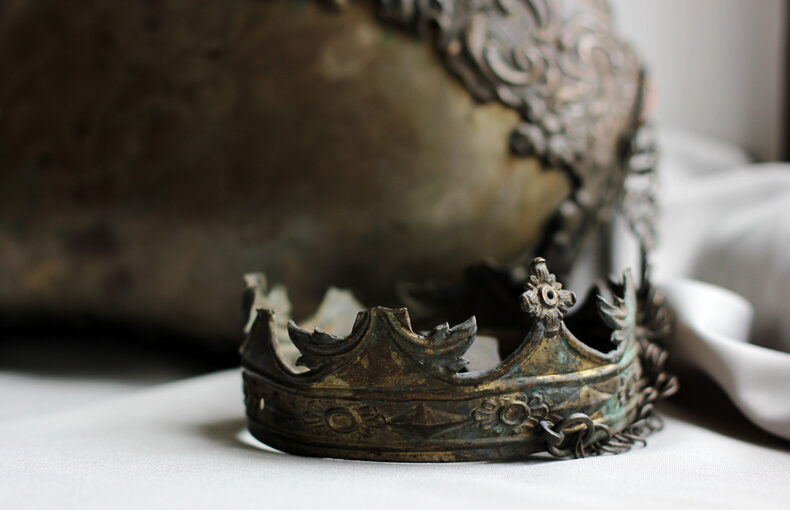
«He who does not know how to thank, does not know how to receive», the famous Aesop wrote. This is the truth of our ancestors realized from time immemorial, leaving back material certificate in the form of votives – objects, which our ancestors brought as a gift
Gifts to higher powers are part of the ancient plot about the history of relations between people and deities. In order to ask for a favor, heal or thank for help, the saints were given items that absolutely pointed to the disaster from which the man was chosen through the intercession of heaven patron. Prisoners released or rescued from captivity the soldiers carried their shackles; lame who again got to their feet, crutches, which they no longer had need; warriors are fragments of arrows drawn from their own ran. Objects that witnessed a great miracle or offered as a gift to the deity by promise for the sake of healing, or to perform any desires, became known as votives. Custom offering votive gifts – a softened form sacrifice, and it arose in the days of the caveman and has survived to this day. Translated from The Latin «ivotives» means dedicated to the gods, and the Latin expression «ex voto suscepto» means literally «according to my promise.»
In Catholicism, such objects were called ex-voto, and in many temples around sarcophags with relics holy or revered images for centuries votives of completely different calibers accumulated. On early XIV century, Pope Clement V even founded a whole commission to test miracles that are like claimed that after his death he began to create English Prelate Thomas de Cantilupe. It turned out that he had burial in Hereford Cathedral has already gathered a whole mountain of votives: 170 silver ships and 41 a ship of wax, 129 human figures or images of body parts made of silver, 1424-made of wax, 77 animal figures, 108 crutches and three wooden carts. In 1554 the number of ex-voto, gathered around the frescoes in the church of Santa Maria de Miracoli in Brescia, which was considered miraculous, had 586 eyes cast in silver.
Demand gives birth to supply, and that’s from the end of The Middle Ages around temples and churches began to grow workshops in which ready were offered votive items or more exquisite masterpieces, created to order of wealthy clients. The same who could not boast of money, but sought to thank the higher powers, made votives at home. They were made of different materials: paper, bone, wood, silver, tin, copper, and bronze even gold. Many votives were made of wax, because it was inexpensive material that did not require from the master neither special skills nor equipment. If the client was dissatisfied, a mistake could easily be eliminated – corrected or even remelted. At those times the tradition has come down to us, and the most popular votive in our time is a candle -one of the oldest symbols of sacrifice to the deity as a sign of a voluntary sacrifice of man to God.
The use of votives was common in the cult practice not only Catholic but Orthodox church too. And in Ukraine in the XVII – XIX centuries, when it took place flourishing of arts and crafts, people with small images were brought to the temples with gratitude legs, arms, hearts, eyes, chest and other organs that symbolize related diseases that in addition to gratitude, they gave hope to others who asked. Often these symbols were made of gold or silver. In Orthodoxy and there is still a custom to hang gifts on: in temples near miraculous images of saints you can see votive pendants. Sometimes it’s chains and crucifixes, sometimes images of the healed bodies made of precious metals.
Over the years, humanity has collected many examples of gratitude that allowed scientists to study life and culture of entire ethnic groups. There are such sights in our country as well as in Zhytomyr. Collection of Zhytomyr votives in regional museum of local lore, though small -only 18 subjects, but the history of each is interesting and mysterious. Mostly all the votives got to the museum in 1919-1920 from Volyn Diocesan antiquary. According to the previous ones research, pendants with the image of the Crucifixion Lord’s; The Virgin and Child and the Savior that carries his cross, were transferred to the ancient repository of Ovruch Cathedral. Two more pendants – from the church with Well of Rivne district.
From the suburbs of Ostroh, from the church in the name of Light Resurrection of Christ, votives were passed from image of the All-Seeing Eye, the icon «for health of Anna» and some others. Once upon a time the heart was probably the most common symbol of votive objects and mostly testified to complete worship and the piety of the believer: in many paintings and icons of The Virgin Mary holds the same sign of her heart patronage and protection.
All the votives from the collection of the Zhytomyr regional local lore museum -are interesting, but little studied part of the museum collection. And it’s not just a landmark of history, religion and culture of Volyn, and evidence of the ability of our ancestors to be grateful.


